Fresh Produce
Tender Coconut
Kerala Tender Coconut
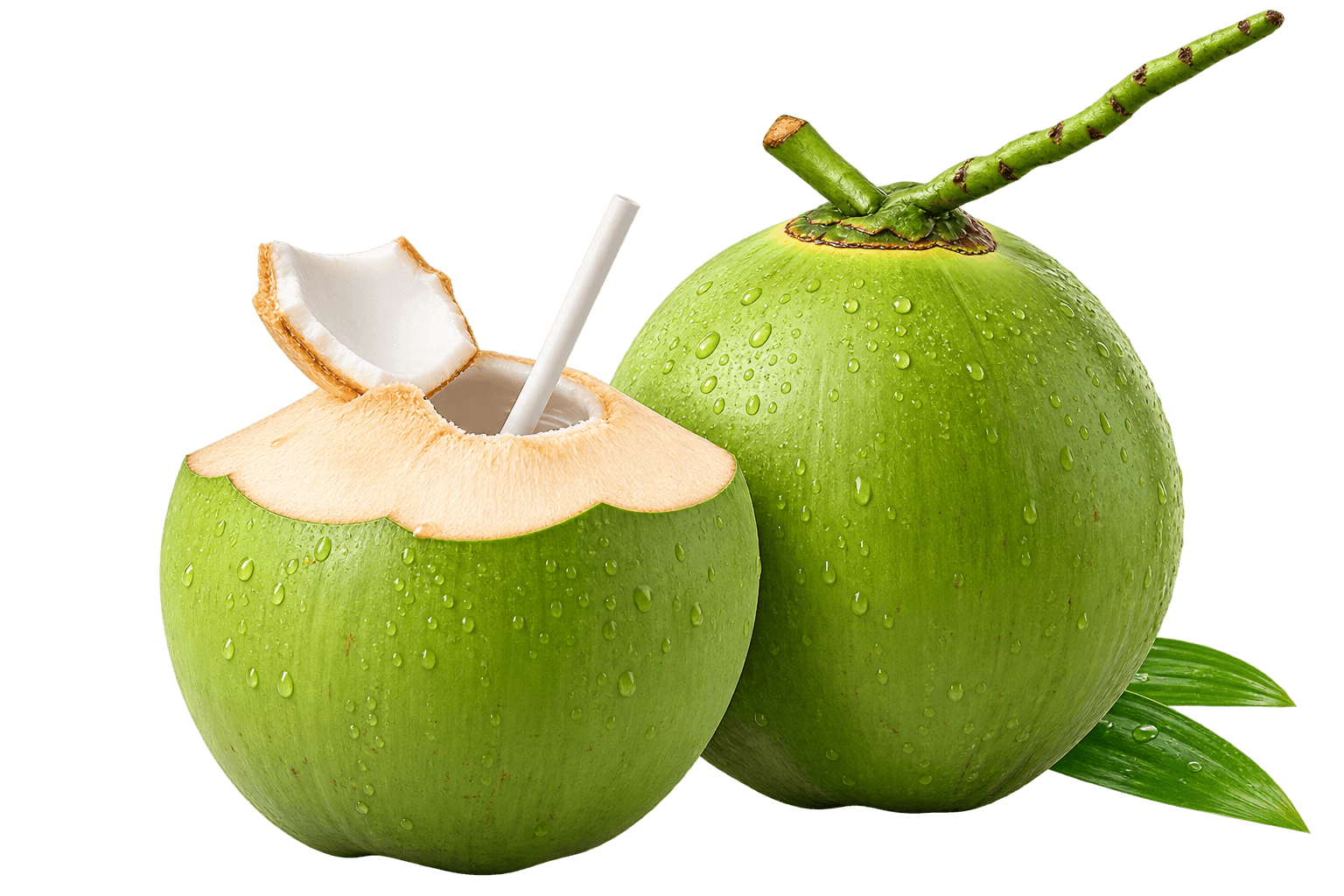
Kerala Tender Coconut is the young, 6-7 month old coconut harvested mainly for its water and soft jelly-like kernel. Kerala’s main varieties are West Coast Tall and hybrids.
1. Size & Weight Grades
Tender coconuts are graded by weight and water content, not mm like spices.
A Grade
Weight: 1.8kg – 2.5kg
Large, 6-8 inches size with 200mL+ water, often 350-700mL. Solid green or reddish tint on top. Very sweet water with higher volume. Preferred for export and premium retail markets.
B Grade
Weight: 1.3kg – 1.8kg
Medium-sized coconuts with sweet water but lower volume compared to A Grade.
C Grade
Weight: Below 1.3kg
Smaller coconuts with lower water content, often used for local markets.
Trade Specifications Seen in Kerala
Large: 2-3kg, 6-8 inches diameter
Medium: Approximately 1.4-2kg, commonly around 1.5kg average
Small: Under 1.3kg, usually local sale only
2. Quality Parameters Buyers Check
1. Color: A Grade coconuts have consistent green/red/biscuit color without brown spots. Solid green travels best long distances.
2. Shape: Round coconuts generally contain more water than oblong ones.
3. Weight Feel: Good coconuts should feel heavy for their size due to high water content.
4. Husk: Whole husk without cracks or damage. Semi-husked variants are also traded.
5. Maturity: Harvested around 7 months old. Over-mature coconuts have less water and harder kernel.
6. Water Taste: A Grade coconuts contain naturally sweet water. Salty taste is considered lower quality.
7. Skin: Smooth exterior without scratches. Reddish tint is often considered premium.
3. Kerala-Specific Points
GI Tag: Kerala Coconut does not currently hold GI status, though Kerala accounts for more than 45% of India’s coconut cultivation area.
Varieties: West Coast Tall varieties produce larger nuts, while hybrids like COD x WCT can yield 400-700mL water.
Season: Peak supply occurs during March-May and September-November. Water is sweetest during the pre-monsoon period.
Export: A Grade whole green coconuts are exported to Gulf countries, UK, and Singapore markets.
Shelf Life: Approximately 30 days with husk and up to 6 months under cool storage conditions.
4. How to Pick Good Kerala Tender Coconut
1. Shake Test: Should not slosh loudly. Excessive sound indicates low water content.
2. Weight: Choose the heaviest coconut for its size.
3. Eye Test: The three eyes should be firm and free from mold or sinking.
4. Color: Uniform green indicates freshness. Brown patches may indicate aging.
5. Sound: A metallic tap sound often indicates good water content.
Quick Buying Guide
For drinking, choose A Grade coconuts above 2kg with round shape and solid green appearance for maximum sweet water content.
For jelly/kernel use, slightly more mature 7-8 month coconuts provide thicker kernel texture.
Avoid oblong shapes, lightweight coconuts, brown spots, or salty-tasting water.
Kerala tender coconut is naturally rich in potassium, magnesium, amino acids, and electrolytes, making it a preferred natural hydration drink.